
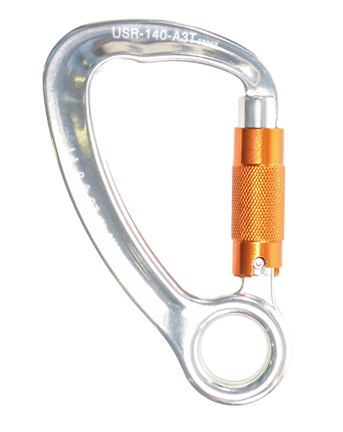
US Rigging Fixed Eye Tri-Act Lock Carabiner 25kN
US Rigging Fixed Eye Tri-Act Lock Carabiner — 25kN MBS
The fixed eye on this aluminum carabiner isn't just a design detail — it's a safety feature. By keeping cordage seated at the spine of the carabiner, the fixed eye helps prevent ropes and slings from migrating toward the gate and potentially side-loading the carabiner under load. Paired with a Tri-Act twist lock gate that requires three distinct actions to open, this is a carabiner built for professionals who don't leave safety to chance. Rated to a minimum breaking strength of 25kN (5,600 lbs).
Key Features
- Fixed eye design reduces cordage slippage and prevents side loading
- Tri-Act twist lock gate — requires three actions to open for maximum security
- Aluminum construction — lightweight and strong
- MBS: 25kN (5,600 lbs)
- Ideal for arborist climbing, rigging, and work positioning systems
Specifications
| Spec | Value |
|---|---|
| Material | Aluminum |
| Gate Type | Tri-Act twist lock |
| Eye Type | Fixed |
| MBS | 25kN (5,600 lbs) |
| Vendor | US Rigging |
| Country of Origin | USA |
Frequently Asked Questions
What is a fixed eye carabiner and why does it matter?
A fixed eye carabiner has a solid, non-rotating attachment point at the top. This keeps cordage — ropes, slings, or lanyards — seated at the spine of the carabiner rather than allowing them to slide toward the gate. Side loading a carabiner significantly reduces its strength, so the fixed eye is an important safety feature in dynamic climbing and rigging applications.
What is a Tri-Act gate?
A Tri-Act gate requires three sequential actions to open: push, twist, and pull (or similar combination depending on design). This triple-action mechanism makes accidental gate opening extremely unlikely, even under vibration or repeated contact with other equipment.
How does this compare to a standard autolock carabiner?
Both are locking carabiners, but the fixed eye adds an extra layer of protection against side loading that a standard autolock doesn't provide. If you're running a system where cordage could migrate toward the gate, the fixed eye design is the safer choice.
What is the MBS rating and what does it mean in practice?
MBS (Minimum Breaking Strength) of 25kN means the carabiner is tested to withstand at least 5,600 lbs of force along its major axis before failure. Working loads in arborist climbing are a fraction of this, providing a substantial safety margin.
Is this carabiner suitable for arborist work positioning?
Yes. The combination of fixed eye, Tri-Act locking gate, and 25kN MBS makes this carabiner well-suited for work positioning lanyards, climbing systems, and rigging connections where accidental opening or side loading must be minimized.